
FROM SPICE ROUTES, SUFI SAINTS AND MONSOON WINDS
The Untold Story of Indian Coffee
The Untold Story of Indian Coffee
When India comes to mind, tea is usually the first drink people think of -steaming, comforting, and deeply woven into daily life. Yet coffee has quietly been part of the country’s story for more than 400 years. Long before chai became a cultural symbol, coffee was already finding a home here -carried along ancient trade routes, carried by pilgrims, and championed by locals who recognised its charm.

Today, India is the seventh-largest coffee producer in the world, contributing roughly 3-3.5 % of global output and providing direct employment to more than 2 million people, according to the latest official estimates. The country has become especially known for its Robusta beans, and as we’ll see, that reputation is anything but accidental.
From Spices to Coffee, the Early Trade Connection
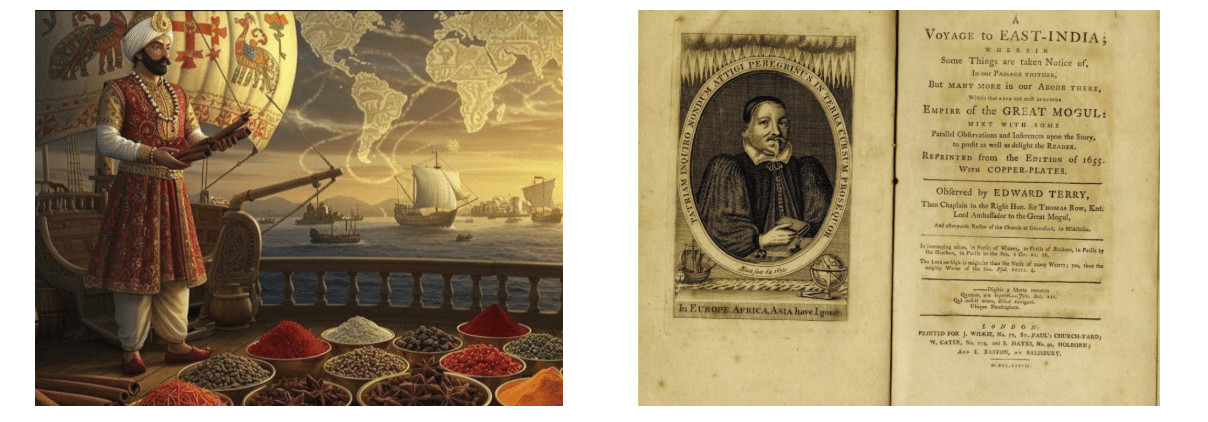
To understand how coffee first arrived in India, it helps to think about spices. For centuries, India was the beating heart of the global spice trade. Pepper from Kerala, cardamom from the Western Ghats, cloves from the East, and cinnamon from the South drew merchants from Arabia, Persia, and beyond. These traders didn’t just come for spices -they brought ideas, tastes, and goods from distant lands.
Among these new sights and flavours was coffee, roasted and brewed in the Yemeni port of Al‑Makha. Indian merchants and nobility, already familiar with exotic imports, were intrigued by this new drink. One of the earliest written references comes from 1616, when Reverend Edward Terry, chaplain to Sir Thomas Roe at the court of Emperor Jahangir, described a “black seed boiled in water… very good to help digestion, to quicken the spirits, and to cleanse the blood.” Coffee had captured the imagination of India’s elite -a beverage at the crossroads of commerce and culture.
The Legend of Baba Budan and the Seven Seeds
From the marketplace to legend -coffee’s arrival in India also carries a story of devotion.
In 1670, a Sufi saint named Baba Budan made the sacred journey to Mecca. On his return, he stopped in Yemen and tasted qahwa -the energising black drink of Arabia. At the time, fertile coffee beans were not allowed to leave Yemen, so the region could protect its valuable export trade.
Legend says Baba Budan found a clever way around this: he hid seven green coffee beans in his beard -seven, a number associated with blessing, and brought them back to India. He planted them in the hills of Chikmagalur in Karnataka’s Western Ghats, where the cool mist, rich soil, and warm rains created ideal conditions for coffee trees to flourish.
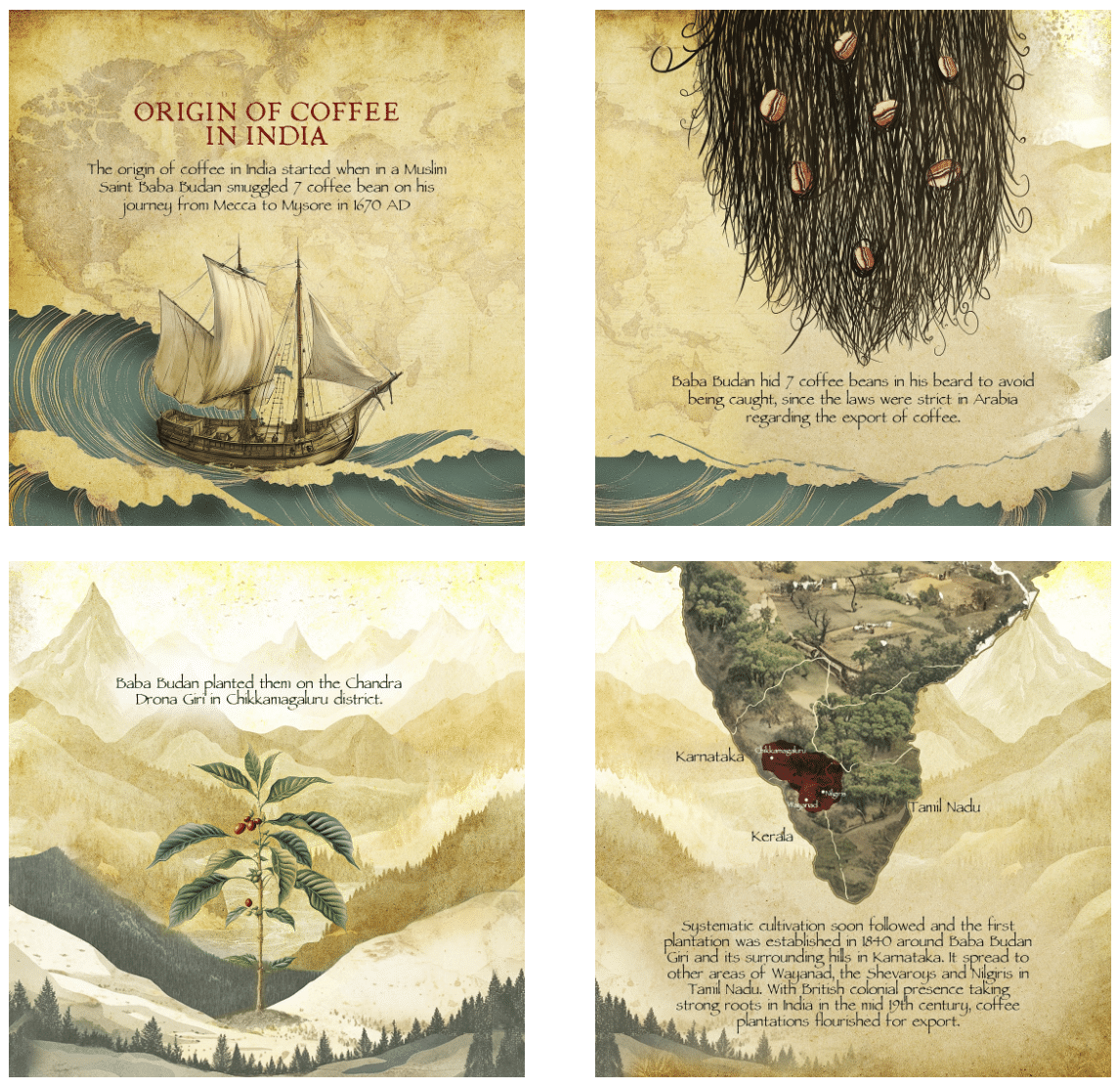
Those hills are now known as the Baba Budangiri Hills, and a shrine stands in his honour. Whether the tale is fully historical or partly mythic, it symbolises how coffee’s roots in India are tied to both faith and curiosity.
Empires, Expansion & Monsoon Magic
Coffee’s journey in India did not end with Baba Budan. Meanwhile, European powers had begun to recognise the commercial value of this exotic and energising bean. In the late seventeenth century, Pieter van den Broecke of the Dutch East India Company encountered coffee in Mocha (in present-day Yemen) and helped facilitate its transfer to Amsterdam. When cultivation in the Dutch Republic proved impractical due to climate constraints, coffee plants were transported to colonial territories better suited to tropical agriculture -first to Ceylon (modern-day Sri Lanka) and later to parts of southern India. Although the Dutch experimented with cultivation in India, they ultimately concentrated their efforts in Java (in present-day Indonesia), where plantation systems proved more commercially viable.
By the eighteenth century, the British East India Company expanded large-scale coffee cultivation in southern India, first in Karnataka and later in the Nilgiri Hills and Wayanad. Coffee beans were shipped around the Cape of Good Hope on months-long voyages to Europe -a journey that could take up to six months.
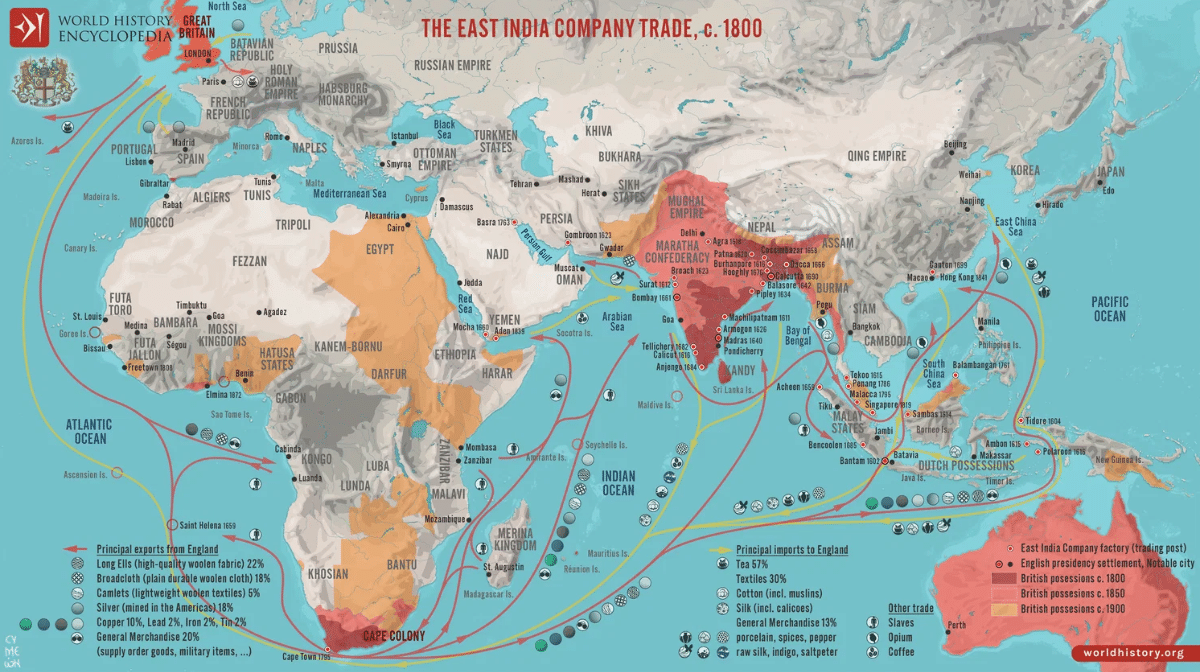
It was during these voyages that an accidental discovery shaped coffee’s future. Beans stored in wooden ship hulls absorbed the humid monsoon air, swelling and mellowing into a smoother, richer flavour profile. European buyers grew to prefer this style, and what began as a quirk of sea travel became a defining feature of Indian coffee.

When steamships eventually shortened travel times, producers sought to replicate the effect on land. Today, on India’s west coast, green beans are spread in open-sided warehouses during the monsoon months of June through September. This carefully controlled exposure, known as Monsoon Malabar*, preserves the unique aroma, body, and low acidity that once developed by chance at sea. Over weeks of turning and conditioning in the damp coastal air, the beans take on a pale golden hue and a characteristically bold, earthy cup -a taste shaped as much by climate and craft as by history.
Crisis, Change & the Rise of Robusta
For generations, Arabica was the dominant coffee in India -delicate, fragrant, and prized. But by the 19th century, a relentless fungus known as coffee leaf rust began to devastate crops, reducing yields by up to 30-50% in some regions. Coffee seemed poised for greatness, but nature had other plans.
The industry’s response came in the form of Robusta -a more robust ‘cousin’ of Arabica that could better withstand India’s humid southern climate and resist disease. What began as a compromise soon became a defining strength. Today, Robusta makes up nearly 70 % of India’s coffee production.
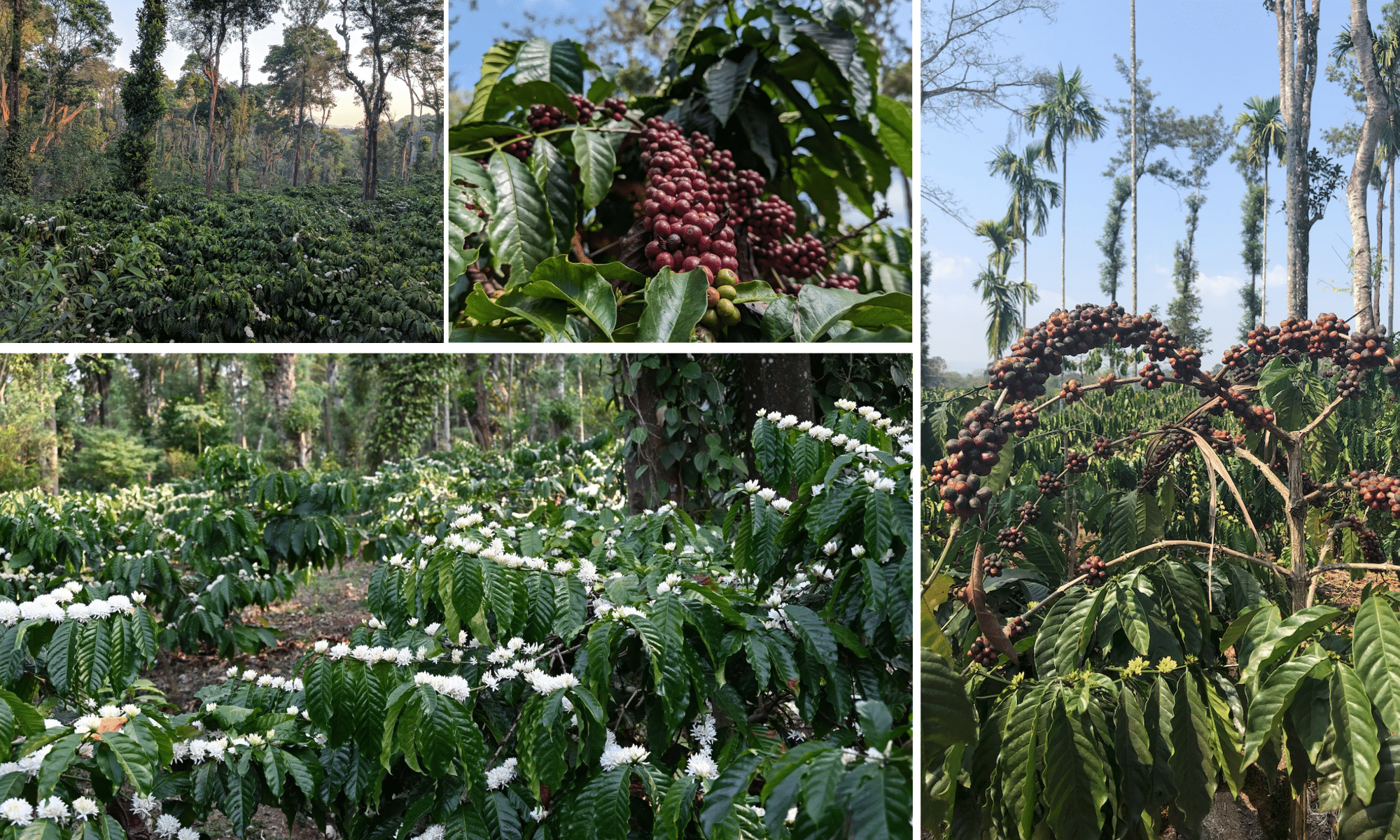
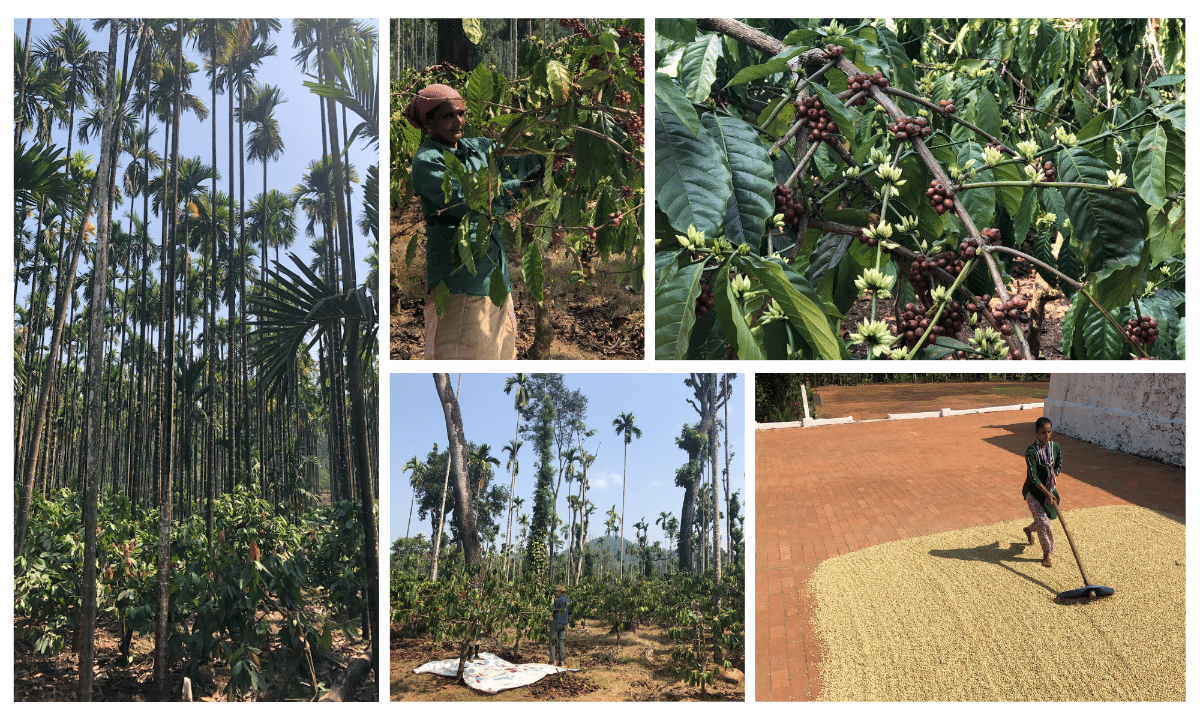
But Indian Robusta is not like many lowland global varieties. It is frequently grown at higher altitudes, often between 1,000 and 1,400 metres, and mostly cultivated in multi-layered agroforestry systems. Coffee shrubs thrive beneath tall areca nut palms, with mid-layer fruit trees such as mango and jackfruit providing partial shade and fruit, while climbing pepper vines wind around these trees. Low-growing understory plants like cardamom enrich the soil and support biodiversity, creating a carefully layered environment that also influences the beans’ distinctive character.
Governance, Growth & Modern Identity
India’s coffee sector operates within an established institutional framework.
The Coffee Board of India, created under the Coffee Act of 1942, originally regulated marketing, pricing, and exports through a centralised pooling system. This facilitated coordinated sales and scale, though estates had limited scope to differentiate or independently market their coffee.
Following economic liberalisation in 1993, private sales were permitted and the Board’s role shifted from direct market control to facilitation. Its current functions include research, extension training, quality promotion, and sectoral development. The Board operates an ISO-accredited laboratory that evaluates up to 69 quality parameters and analyses thousands of samples annually, covering sensory assessment, grading, pesticide residue testing, and technical support for emerging processing methods.
The Board has also supported varietal development. Chandragiri (Selection 13) has been widely adopted due to higher productivity and resistance to coffee leaf rust and white stem borer. More recent introductions include climate-resilient cultivars such as Raksha, developed in response to environmental pressures.
In parallel, the Plantation Labour Act mandates welfare provisions on estates exceeding 5 hectares or employing more than 15 workers. These include housing, healthcare, sanitation, schooling, and childcare. While increasing production costs, the Act formalises worker welfare and community infrastructure within plantation operations.
Together, these regulatory and institutional mechanisms shape the governance, quality standards, varietal development, and labour conditions of Indian coffee.
EFICO’s Indian Coffee Portfolio
From smuggled seeds carried on monsoon winds to scientific innovation and climate-smart cultivation, India’s coffee heritage is rich, layered, and ever-evolving -a story that perfectly complements EFICO’s green coffee portfolio.
In late January, EFICO’s Green Coffee Trader Eric, visited our long-standing preferred partner producers across southern India, mainly in the Karnataka region. He returned with inspiring stories, vivid impressions, and the reassurance that our Indian green coffee selection is both comprehensive and versatile -thoughtfully curated to meet the evolving needs of our partner roasters.
Monsoon Malabar (Arabica or Robusta)
A unique style shaped by history and climate. Carefully prepared beans are exposed to the humid monsoon winds along the Malabar Coast, transforming their structure and flavour profile. The cup is mellow, full-bodied, and low in acidity, with subtle spice notes and consistent quality -available in both Arabica and Robusta varieties.
Indian Robusta
Grown at higher altitudes amid mixed fruit and spice cultivation, these coffees are offered as cherry (natural) or parchment (washed). With clean structure and refined profiles, this Robusta delivers depth and balance, ideal for blending or single-origin applications.
Indian Arabica
Cultivated in elevated regions, and offered as cherry (natural) or plantation (washed) lots, Indian Arabica provides aromatic complexity, rounded acidity, and reliable performance across roast profiles.
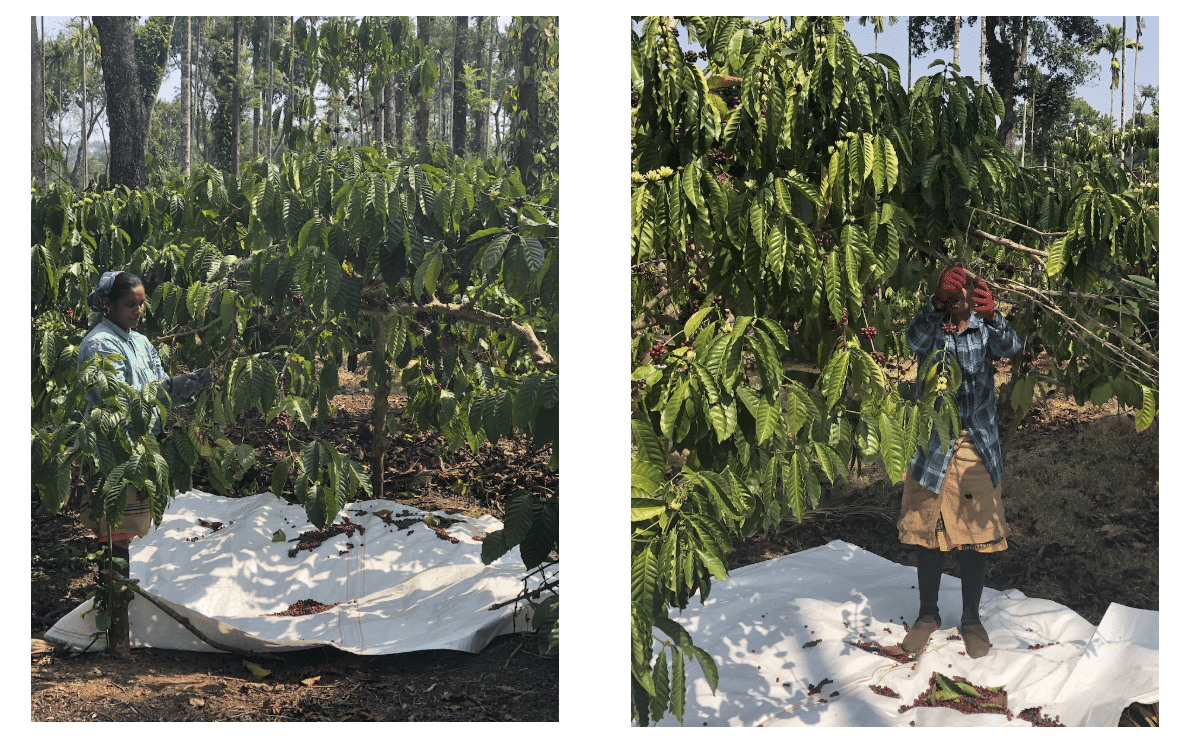
Whether you are exploring distinctive Monsoon Malabar, premium Robusta, or carefully selected Arabica lots, our Green Coffee Trade Team is ready to discuss profiles, availabilities, and tailored sourcing opportunities.
CREDITS, KUDO’s & REFERENCES
However, with the advent of modern, faster, and sealed shipping, Indian coffee arrived in Europe fresher, greener, and with its acidity intact -but no longer delivered the mellow flavour that customers had grown to expect.
**India produces wet-processed and dry-processed coffees, including Arabica and Robusta varieties. Dry-processed Arabica coffees are referred to as ‘Cherry’. Wet-processed Arabica is known as ‘Plantation Arabica’, while wet-processed Robusta is called ‘Parchment Robusta’.
January 2026 Coffee Tour – KOFFIECAFE